Goa, India
Things to Do in Goa
Beaches, colonial heritage, temples, nature, and nightlife — find the activities that fit your trip.
Full Goa Guide →beExploring / Goa
Overview
Goa has more going on than most visitors realise before they arrive. The beaches are the obvious draw, but Old Goa's UNESCO churches, the inland temples of Ponda, spice plantation tours, and the Portuguese quarter of Fontainhas all reward a longer stay. This guide breaks down the best things to do so you can find what actually fits your trip.
beExploring / Goa
Best Things to Do at a Glance
Best for relaxation
South Goa beaches — Palolem or Agonda for a peaceful day in the sun
Best for history
Old Goa — Basilica of Bom Jesus, Se Cathedral, and Church of St. Francis of Assisi in one walk
Best half-day trip
Ponda temples — Mangueshi and Shantadurga back-to-back, 30 minutes from the coast
Best nature day
Spice plantation tour in the morning, Dudhsagar Falls in the afternoon (jeep trip required)
Best for a night out
Floating casino on the Mandovi River — Deltin Royale is the largest and most popular
#1 Thing to Do
Beaches in Goa
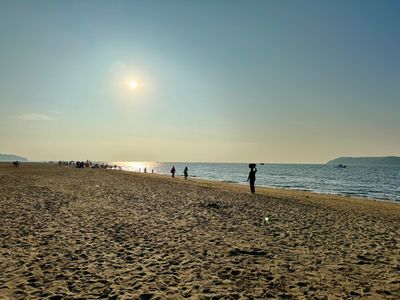
Goa's coastline stretches 105 km along the Arabian Sea and splits neatly into two personalities. North Goa is louder, busier, and more social. South Goa is quieter, cleaner, and far easier to relax in. Both are worth visiting — the right one depends on what kind of trip you're having.
North Goa: Baga, Calangute & Anjuna
Baga and Calangute are Goa's most popular beach stretches — lined with beach shacks, water sports vendors, and easy access to restaurants and nightlife. Anjuna has a slightly more alternative vibe and hosts the famous Wednesday flea market. Vagator and Morjim are quieter North Goa options if you want something between the two extremes.
South Goa: Palolem & Agonda
Palolem is a horseshoe-shaped bay with calm water, shaded beach huts, and a relaxed crowd. Agonda is even quieter — one of the least developed beaches in the state. Both are significantly calmer than anything in the north. If peace is the goal, start here.
Water Sports
Parasailing, jet skiing, banana boat rides, and kayaking are widely available at Baga, Calangute, and Anjuna. Scuba diving operators run from Baga and Grande Island. Snorkeling trips to Bat Island are popular and easy to arrange from South Goa.
UNESCO World Heritage Site
Heritage & Old Goa
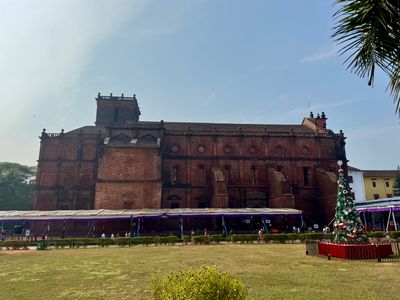
Old Goa was once one of the largest cities in the world and the seat of Portuguese colonial power in Asia. Today its cluster of Baroque churches — several in a single square — is one of the most impressive and underrated heritage sites in India. Half a day is enough to cover the highlights.
Basilica of Bom Jesus
Built in 1594, the Basilica houses the mortal remains of St. Francis Xavier, one of the most venerated missionaries in the Catholic world. His body has been preserved for over 400 years and is displayed in an ornate mausoleum. The church is a UNESCO World Heritage Site and the most visited monument in Goa.
Se Cathedral
The largest church in India and one of the largest in Asia, the Se Cathedral took nearly 80 years to complete. Its Golden Bell is said to be one of the finest in the world. It sits across the square from the Basilica — both are easily visited together in an hour.
Church of St. Francis of Assisi
Adjacent to the Basilica, this 1661 church features intricate woodwork, Baroque frescoes, and a blend of Portuguese, Tuscan, and Manueline architectural styles. The Archaeological Museum of Goa is housed in the attached convent and is worth a quick look.
Aguada Fort
Built in 1612 by the Portuguese to guard the entrance to the Mandovi River, Fort Aguada sits on a headland above Sinquerim Beach with sweeping views of the coast. The lighthouse is one of the oldest in Asia. The walk around the ramparts is easy and the views are excellent.
A different side of Goa
Temples in Goa
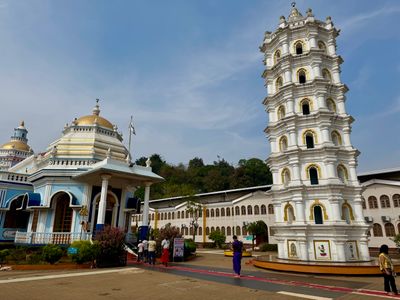
Away from the beaches and colonial churches, the inland district of Ponda is home to some of the most important Hindu temples in Goa. Many were relocated from coastal areas during Portuguese rule to protect them from destruction. A temple run through Ponda is one of the best half-day trips from the coast.
Shree Mangueshi Temple
Goa's most visited Hindu temple, dedicated to Lord Manguesh (an incarnation of Shiva). The whitewashed exterior, elegant domes, and towering lamp tower (deepastambha) make it one of the most photogenic temples in the state. The temple dates back 400 years in its current form, though its roots are much older.
Shree Shantadurga Temple
A few kilometres from Mangueshi, the Shantadurga Temple is dedicated to the goddess of peace and mediation. The striking red and white Indo-Portuguese architecture is unusual among Hindu temples and reflects the cultural blending unique to Goa. The grounds are peaceful and well-maintained.
Combining Both
Mangueshi and Shantadurga are 4 km apart in the Ponda district, about 30–40 minutes from most North Goa beaches. They're best visited together in a single morning. Dress modestly (shoulders and knees covered) and remove shoes before entering the inner sanctum.
Beyond the beaches
Nature & Spice Tours in Goa
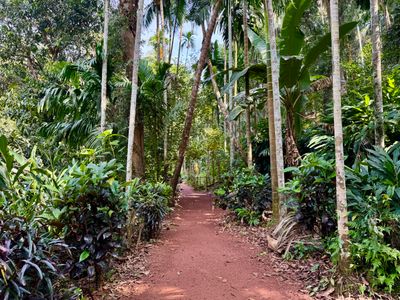
Goa's interior is lush, green, and largely unexplored by most visitors who stay on the coast. The Western Ghats — a UNESCO biodiversity hotspot — form Goa's eastern border, and some of the most memorable day trips in the state are found there.
Spice Plantation Tours
Tours at Sahakari Spice Farm, Savoi Plantation, and Tanshikar Organic Farm take you through working plantations growing cardamom, vanilla, pepper, cinnamon, and nutmeg. Most tours include a traditional Goan lunch made from fresh plantation ingredients. A genuinely good half-day experience that most visitors don't think to do.
Dudhsagar Waterfall
One of India's tallest waterfalls at over 1,000 feet, Dudhsagar ("Sea of Milk") is on the Goa–Karnataka border inside Bhagwan Mahavir Wildlife Sanctuary. The most common access is by jeep safari from Mollem — the journey through the forest is part of the experience. The falls are most powerful during and just after the monsoon.
Bhagwan Mahavir Wildlife Sanctuary
Goa's largest wildlife sanctuary covers 240 km² of the Western Ghats and is home to gaur, leopard, and over 200 bird species. The sanctuary is best explored with a guide. The Devil's Canyon viewpoint and the Dudhsagar approach trail are the most accessible entry points.
Goa's capital city
Panaji & Fontainhas, Goa
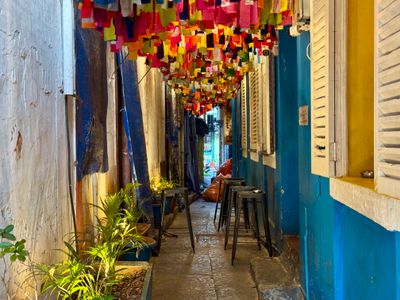
Panaji (Panjim) is Goa's small but charming capital, and one of the most pleasant cities to walk in India. The old Latin Quarter of Fontainhas is the highlight — narrow alleys lined with Portuguese-era houses painted in ochre, indigo, and terracotta. An easy half-day on foot.
Fontainhas
Goa's last remaining Latin Quarter is a tangle of cobbled lanes with 200-year-old Portuguese villas, iron-railed balconies, and tiny chapels. The Stairway of the Loose Stones and the Rainbow Stairs (Escadinhas Ivens) are popular photography stops. Small cafes, art galleries, and restaurants fill the ground floors of the heritage buildings.
Immaculate Conception Church
Panaji's most iconic landmark — a gleaming white Baroque church on a hilltop overlooking the city, reached by a grand zigzagging staircase. Built in 1541 and rebuilt in 1619, it is especially beautiful in the evening when lit up. The views of the city and Mandovi River from the entrance are excellent.
Panjim Riverside & Mandovi River
The riverside promenade along the Mandovi is a pleasant walk with views of the river, passing ferries, and the statue of Lord Parashuram. Boat cruises on the Mandovi depart from near the casino jetties and are a popular sunset activity.
Rainbow Stairs, Goa
The rainbow stairs in Goa are one of the most photographed spots in Panaji — a vibrant stairway turned public art installation by local artists. The mosaic-covered Stairway of the Loose Stones (Escadinhas Ivens) is nearby and equally striking. Both are in the Fontainhas quarter and easy to find on foot.
One of India's few gaming destinations
Nightlife & Casinos in Goa
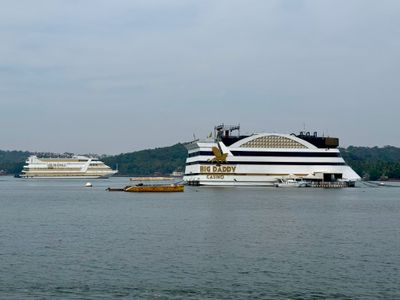
Goa is one of the very few places in India where gambling is legal, and its floating casinos on the Mandovi River have become one of the more unexpected tourist draws in the state. Beyond the casinos, the beach party scene in North Goa is well-established and runs late.
Floating Casinos
Deltin Royale, Deltin Jaqk, and Casino Pride are moored on the Mandovi River and accessible from Panaji by ferry. Deltin Royale is the largest, with multiple gaming floors, live entertainment, and a restaurant. Entry fees are steep but typically include food and drinks. A hotel room is not required.
Beach Party Scene
Anjuna, Vagator, and Baga are the main centres for Goa's nightlife. Curlies at Anjuna Beach and Club Cubana in Arpora are among the best-known venues. The energy peaks between November and February. Silent discos and all-night parties on the beach are common during peak season.
Night Markets
The Saturday Night Market at Arpora (November to April) is a large open-air market with food stalls, live music, and craft vendors. Anjuna Flea Market runs on Wednesdays and is one of the oldest markets in Goa. Both are good evening alternatives to the bar and club scene.
beExploring / Goa
Planning Tips
Rent a scooter. It is the most practical way to move between beaches, temples, and restaurants and costs a fraction of taxis.
Go out early. The best light and temperatures are in the morning. By midday the sun is intense and the main sites fill up.
Split your time between North and South Goa if you have more than 3 days. They are genuinely different experiences.
Eat at beach shacks and local restaurants in town. The best Goan food — fish curry rice, prawn balchão, bebinca — is not in hotels.
beExploring / Goa
Common Mistakes
Staying in one area and never leaving. North-only visitors miss the peaceful South; South-only visitors miss the energy and heritage of North Goa and Old Goa.
Underestimating distances. Goa is larger than it looks. Ponda temples are 30+ minutes from the coast; Dudhsagar is a full day. Plan accordingly.
Relying on app-based taxis for everything. In Goa, pre-arranged taxis and rented scooters are more reliable than Uber or Ola, especially at night or in remote areas.
Dismissing the monsoon. June–September brings heavy rain but also the most dramatic landscapes, empty beaches, and roaring waterfalls. It is a genuine option for the right traveller.
beExploring / Goa