Seattle — Washington State
Seattle Restaurants:
Where to Eat
The market, the neighborhoods, the breweries, and the coffee, sorted by what kind of meal you actually want.
Seattle Guide →beExploring / Seattle
Overview
Seattle is a genuinely serious food city, and the single most useful thing to know is that the best of it is not downtown. Pike Place Market is worth a morning and it is a real working market rather than a theme park, but the restaurants people actually rave about are in Ballard, Capitol Hill, Fremont, and the International District.
The city's specialities are what you would expect from a cold-water port: salmon, oysters, spot prawns, and Dungeness crab, alongside a Vietnamese and Chinese food scene that predates the tech money by decades. Add 75-plus breweries and the coffee culture the city exported worldwide, and the honest problem is fitting it into a trip rather than finding something good.
beExploring / Seattle
Where to Eat at a Glance
Best single food experience
A morning at Pike Place Market, then oysters and chowder on the waterfront
Best dinner street
Ballard Ave, walkable end to end with a taproom at either end
Best beer afternoon
The Ballard brewery district, a dozen taprooms within a few blocks
Best lunch with a group
Melrose Market on Capitol Hill, or the Pike Place food stalls
Best coffee stop
The Starbucks Reserve Roastery for the spectacle, an independent on Capitol Hill for the cup
beExploring / Seattle
Before You Eat
Reservations move fast
The best Ballard and Capitol Hill dining rooms book out two to four weeks ahead for a Friday or Saturday. Weeknights are far easier, and most places hold some counter seating for walk-ins.
Pike Place is a morning, not a dinner
The market opens early and the stalls wind down mid-afternoon. Go before 10am to see it working rather than crowded, then eat dinner somewhere else.
The neighborhoods close earlier than you think
Outside Capitol Hill, many kitchens stop at 9pm on weeknights. Capitol Hill is the reliable option for a late meal.
Happy hour is a real institution
Seattle takes happy hour seriously, and oyster deals from 3pm to 6pm are the cheapest way to eat well in an expensive city. Worth planning an afternoon around.
Tipping and fees
Many Seattle restaurants add a service charge or living-wage surcharge to the bill. Check the bottom of the menu so you are not tipping twice.
Getting between neighborhoods
Capitol Hill is one light rail stop from downtown. Ballard and Fremont are bus or rideshare only, so build 25 minutes each way into a dinner plan.
Open since 1907
Pike Place Market & the Waterfront
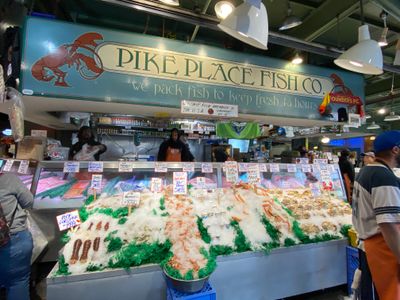
Pike Place is the most-searched thing to eat in Seattle and it deserves most of its reputation, provided you treat it as a working market rather than a restaurant district. Nine acres of produce stalls, fishmongers, bakeries, and small counters, all of it busiest between 11am and 2pm. Come early, eat standing up, and save the sit-down meal for a neighborhood.
Eat at the counters, not the sit-down rooms
The market rewards grazing. A cup of chowder, a piroshky, a bowl of noodles, and a doughnut from the stalls beats any single restaurant meal inside the market, and costs less. The long queues are mostly for one very famous coffee shop and one very famous doughnut window, neither of which is the best version of either in the city.
Seafood is the reason to be here
Dungeness crab, spot prawns in their short spring season, oysters from a dozen Puget Sound and Hood Canal beds, and salmon that has not travelled far. The fishmongers will pack and ship. If you only eat one thing in Seattle, make it oysters somewhere with a raw bar, and go at happy hour.
The waterfront below the market
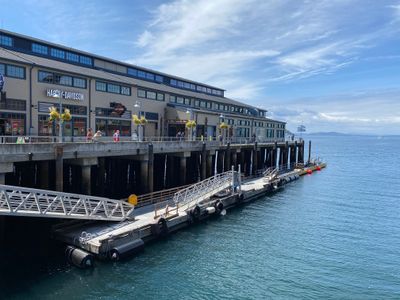
The rebuilt waterfront has changed this stretch considerably. There are proper seafood restaurants along the piers now rather than only tourist chowder windows, and the walk down from the market to the Great Wheel takes ten minutes. Eat looking at Elliott Bay at least once.
The International District, ten minutes south
If the market feels too crowded, the International District is the better food neighborhood and almost nobody schedules it. Vietnamese, Cantonese, Japanese, and Filipino kitchens that have been there for generations, plus Uwajimaya, the Asian grocery that is worth an hour on its own.
Where the good dinners are
Neighborhood Dining
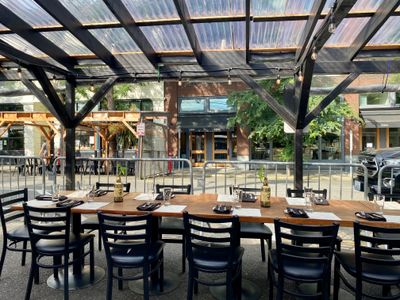
This is the category that matters. Seattle's restaurant scene runs on neighborhood strips rather than a single dining district, and four of them are worth organising an evening around. All are 20 to 30 minutes from downtown, and all are better than anything within two blocks of the Space Needle.
Ballard Ave
The best dinner street in the city. A few walkable blocks of Nordic-influenced cooking, seafood, and small plates, bookended by taprooms, with the Sunday farmers market running down the middle of it year-round. If you have one good dinner in Seattle, have it here. See the Ballard neighborhood guide for the rest of the day around it.
Capitol Hill
The densest concentration of restaurants and bars in Washington, and the only part of Seattle that reliably serves food late. Pike and Pine hold everything from counter ramen to tasting menus within a few blocks. Also the easiest to reach, being one light rail stop from downtown. More on the Capitol Hill guide.
Fremont & Wallingford
Quieter and more residential, which makes it the easiest of the four with kids. A solid dining strip along 36th and 45th, Fremont Brewing's outdoor biergarten at the centre of it, and the Burke-Gilman Trail if you want to walk dinner off. See the Fremont guide.
The International District & Georgetown
The two neighborhoods visitors skip and locals do not. The ID is the city's deepest Asian food scene, walkable from the stadiums and on the light rail. Georgetown, further south, is where a lot of the newer breweries and the more interesting cheap food have gone as rents rose elsewhere.
Breweries & Taprooms
75+ breweries citywide
Seattle has more breweries than almost any US city its size, and the Ballard cluster is the densest walkable concentration of them in the country. Most taprooms allow outside food or have a truck parked outside, which makes an afternoon of them an easy plan. The full directory below covers 60-plus taprooms with hours, food policy, and dog and kid rules.
sports_bar Every Seattle brewery, mappedBest for groups who cannot agree
Markets & Food Halls
Seattle solves the group-lunch problem better than most cities. Between the market stalls, a handful of proper food halls, and the year-round farmers markets, there is almost always somewhere everyone can order something different and still sit together.
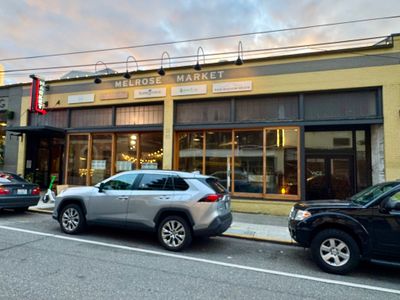
Melrose Market, Capitol Hill
A converted 1920s auto row building holding a butcher, a wine bar, a cheesemonger, and a few small restaurants under one roof. Small enough to walk in ten minutes and good enough to spend two hours in. The most pleasant lunch on Capitol Hill.
Pike Place stalls
The original food hall, if you treat it as one. Grab from three or four counters and eat on the benches overlooking Elliott Bay. Cheaper and more interesting than any single sit-down room in the market.
Ballard Farmers Market
Runs every Sunday, year-round, down the middle of Ballard Ave. Prepared food alongside the produce, and the surrounding restaurants and taprooms open around it. The single best Sunday plan in Seattle.
Uwajimaya, International District
A large Asian grocery with a food court attached, and a genuinely good one. The best cheap lunch near the stadiums, and worth a wander through the aisles afterwards even if you are not buying.
The thing Seattle actually exported
Coffee
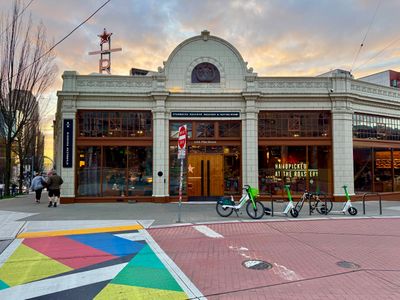
Seattle invented the American coffee shop as a place to sit, and the city still takes it more seriously than almost anywhere. The chain that made it famous is the least interesting part of the story, though its flagship roastery is genuinely worth seeing.
The Starbucks Reserve Roastery, Capitol Hill
A working roastery and coffee hall rather than a cafe, with copper cask, tasting flights, and a bar. Even people who avoid the chain on principle tend to find it impressive. Go for the spectacle; go elsewhere for your daily cup.
Capitol Hill independents
The highest concentration of serious independent roasters and cafes in the city, most of them within a few blocks of Pike and Pine. This is where to actually drink coffee in Seattle.
The original Pike Place store
The 1912 storefront near the market draws a long queue for what is a normal cup of coffee in a small, crowded room. Worth a photo from outside; not worth 40 minutes of a short trip.
Ballard and Fremont
Both neighborhoods have excellent cafes that double as the local living room, which is the thing Seattle coffee culture is really about. A morning cup in Ballard before the farmers market is close to the ideal version of it.
beExploring / Seattle
Dining Tips
Book Ballard and Capitol Hill dinners two to four weeks out for a weekend. Weeknights usually open up a few days ahead.
Eat oysters at happy hour. Between 3pm and 6pm they run a fraction of dinner prices across the city, and the quality is the same.
Capitol Hill is the only good dining neighborhood on the light rail. If you are not renting a car, that makes it the easiest dinner plan from downtown.
Aim for an early dinner outside Capitol Hill. Many neighborhood kitchens stop serving at 9pm on weeknights.
beExploring / Seattle
Common Mistakes
Eating only at Pike Place. The market is a great morning and a mediocre dinner. The food people come back to Seattle for is in the neighborhoods.
Queueing 40 minutes at the original Starbucks. It is a normal cup of coffee, and Capitol Hill has a dozen better ones with no line.
Assuming downtown near the Space Needle is where to eat. Seattle Center is a tourist food desert. Walk fifteen minutes or take the train.
Tipping on top of a service charge without checking. Many Seattle restaurants add one automatically, and it is stated at the bottom of the menu.
beExploring / Seattle
Keep Planning Seattle
Seattle Guide
Full city overview
Every Seattle Brewery
60+ taprooms, mapped and filterable
Where to Stay in Seattle
Five neighborhoods compared
Seattle Itineraries
A weekend, planned hour by hour
Ballard
The best dinner street in the city
Things to Do in Seattle
Attractions, activities, neighborhoods
beExploring / Seattle